
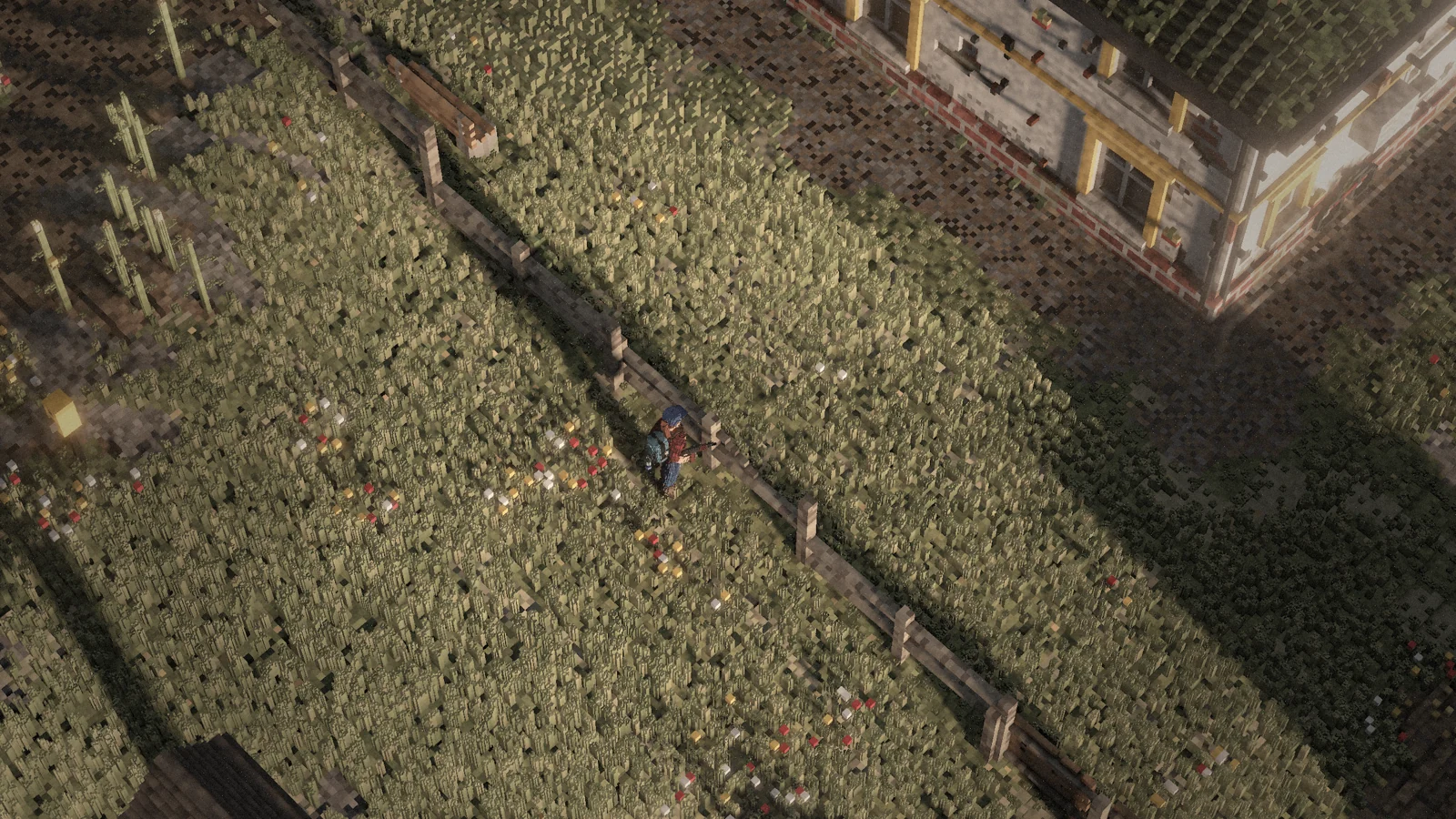
Ways to move
Crouching and crawling are slow but quiet, walking and jogging get you across the map, sprinting gets you out of trouble. Moving while aiming is slow.
Sprinting needs stamina and forward movement. Raising your weapon, lying down or some injuries stop you from sprinting.
Weight lowers your stamina
Up to a certain weight you carry freely; every kilogram above that lowers your maximum stamina. Everything counts: attachments, ammunition and whatever is in your bags. Carry less and you sprint longer.
Recovering stamina
Stamina comes back after a short pause – fastest when you stand still, slower while you walk or jog. Run it down completely and you are winded until it has recovered a bit.
Climbing and rolling
Space climbs over a low obstacle in front of you if there is room to land. Otherwise you roll a few metres, which costs stamina. Look where you want to end up first.
Swimming and drowning
You wade through water up to your chest. Deeper than that you swim at the surface, slowly and without a weapon in your hands. The longer you stay in deep water, the more tired you get; a heavy load and wet clothes tire you much sooner.
- Exhausted: you breathe heavily and swim more slowly – head for the shore.
- Going under: you cough and barely make progress – reach the shore now.
- Drowning: you lose health until you reach ground you can stand on.
Once you stand on firm ground again you recover within a minute or so. Infected and animals do not follow you into deep water.
Keep reading
Inventory & equipment
Inventory size, pocket layout and weight are separate limits.
Firearms, ammo & attachments
Calibre alone is not enough. Match the magazine, load the rounds and check the weapon.
Melee & close combat
Quick strikes, heavy swings and keeping your distance from infected and other survivors.
Damage, armour & PvP
The server decides who can hurt whom. Where you hit and what you wear decide the result.